
Last Updated: November 20, 2026
Quick Summary
A hydrating serum adds water to skin, not oil, so it suits tight, dull or dehydrated skin rather than flaky, rough dryness. Look for hyaluronic acid and glycerin, apply one pump to damp skin morning and night, then seal it with a moisturizer or facial oil.
- Dry skin lacks oil, while dehydrated skin lacks water and can affect oily skin too.
- Humectants attract water, emollients soften skin and occlusives seal moisture in.
- Apply products from thinnest to thickest and press your serum over damp skin.
- Twice daily is standard, and one pump covers the face and neck.
- Introduce one new product at a time and give it a week before the next.
Table of Contents
- What a Hydrating Serum Actually Does for Sensitive Skin
- Dry vs Dehydrated Skin Symptoms: Why the Difference Changes Your Routine
- Ingredients to Look For and What to Skip When Skin Reacts
- Why Molecular Weight Matters More Than the Percentage on the Label
- How to Layer Skincare Serums Without Triggering Redness
- Patch Testing and Barrier Repair: The Steps Most People Skip
- Where Pür-Oils Hydrating Serum Fits in a Sensitive Skin Routine
- Build Your Sensitive Skin Routine With the Essentials Trio
- Frequently Asked Questions
What a Hydrating Serum Actually Does for Sensitive Skin
Hyaluronic acid is a sugar molecule that occurs naturally in skin, where it holds water and helps keep the surface looking plump and comfortable. In skincare, it works as a humectant: it attracts and retains water. That is the whole job, and it is a surprisingly important one for skin that reacts easily. Reactive skin is rarely short on products. It is usually short on water and patience.
Here is the part most guides get wrong. A hydrating serum is not a lighter version of a moisturizer, and it will not fix skin that is dry rather than dehydrated. It adds water. Whether that helps you depends on which problem you actually have.
Below, we break down what hyaluronic acid does, how to tell dry from dehydrated skin, which ingredients calm a reactive face, and how to layer a serum without waking up red. Our founder, facialist and formulator Lea Dolesji takes a thoughtful, ingredient-focused approach rather than building around trends.
Dry vs Dehydrated Skin Symptoms: Why the Difference Changes Your Routine
Dry skin lacks oil. Dehydrated skin lacks water. They can look identical in the mirror and need completely different routines.
Dry skin feels rough, flaky, or tight after cleansing and often looks dull. It is a skin type, usually genetic, and it responds to oils and emollients that reinforce the lipid barrier. Dehydrated skin is a temporary state. It can affect anyone, including oily skin, and it shows up as tightness, faint creping, and fine lines that appear worse in the morning. Heat, dry indoor air, over-cleansing, and harsh actives all push skin toward dehydration.
This distinction matters because a hydrating serum addresses water, not oil. If your skin is flaky and rough, a serum alone will leave you disappointed. If your skin is tight and dull but not flaking, water is exactly what is missing. Many people are both at once, which is why hydration and nourishment work together rather than competing. If oiliness and flaking sound familiar, our products for dryness are formulated for that combination.
Ingredients to Look For and What to Skip When Skin Reacts
Start with the ingredient list, not the front of the bottle. A formula built for reactive skin should be short, transparent, and free of the usual triggers.
Look for hyaluronic acid and glycerin, both humectants that pull water into the upper layers. Aloe and licorice root are soothing botanicals found in some sensitive-skin formulas. Peptides are a quiet addition worth knowing: they are not humectants, but they support a smoother-looking surface over time and rarely provoke a reaction.
Skip or approach with care: added fragrance and essential oils in high concentrations, drying alcohols near the top of the list, and strong exfoliating acids layered with retinol. None of these are universally bad, but reactive skin has less room for error. Natural ingredients aren't automatically suitable for everyone, so review ingredient lists carefully, especially if you are prone to reactions.
Humectants, Emollients and Occlusives: Three Jobs, Not One
Humectants attract water. Emollients soften and smooth the surface. Occlusives seal moisture in so it does not evaporate. A hydrating serum is a humectant step. It needs an emollient or occlusive on top, or the water it attracts will leave with the dry air. That single fact explains why some people find serums useless: they apply one and stop there.
Ingredient Interactions Most Guides Never Map
This is where sensitive skin gets into trouble, and where most ingredient lists stop short. The problem is rarely one product. It is the pairing.
- Hyaluronic acid and retinoids. A humectant layer under a retinoid is generally fine and can cushion the tightness that follows. The risk is applying both to bare, damp skin in the same minute. Let the serum settle, then apply the retinoid sparingly.
- Hyaluronic acid and AHAs or BHAs. Acids lower the surface pH, and layering a humectant immediately after can sting on compromised skin.
- Niacinamide and vitamin C. The old warning about combining these has softened, but reactive skin still often flushes when both arrive in high concentrations at once. Introduce one, wait a week, then the other.
- Multiple humectants plus a rich cream. More water-binding layers under a heavy occlusive can feel suffocating on oily-reactive skin.
- Essential oils and actives. Botanical fragrance plus an acid or retinoid is the most common pairing behind a sudden sting.
A simple rule holds up well: introduce one active at a time, keep humectants separate from exfoliation, and never stack two new products in the same week. If you want to browse formulas built around soothing ingredients, our sensitivity and redness collection is a reasonable place to start.
Why Molecular Weight Matters More Than the Percentage on the Label
A percentage on a label tells you how much hyaluronic acid is in the bottle. It does not tell you how the formula behaves on skin.
Hyaluronic acid comes in different molecular weights, and the size of the molecule changes how it feels and where it sits. Hyaluronic acid comes in different molecular weights, and combining more than one weight can give a serum a lighter feel than a single-weight formula. The Pür-Oils Hydrating Serum uses two weights of hyaluronic acid.
How to Layer Skincare Serums Without Triggering Redness
Order matters more than quantity. Apply products from thinnest to thickest, and give each layer a moment to settle before the next.
- Cleanse with lukewarm water and a gentle cleanser.
- Mist a hydrating toner while skin is still damp.
- Press in your serum, one pump, over damp skin.
- Follow with a facial oil or moisturizer to seal it.
- Finish with SPF in the morning.
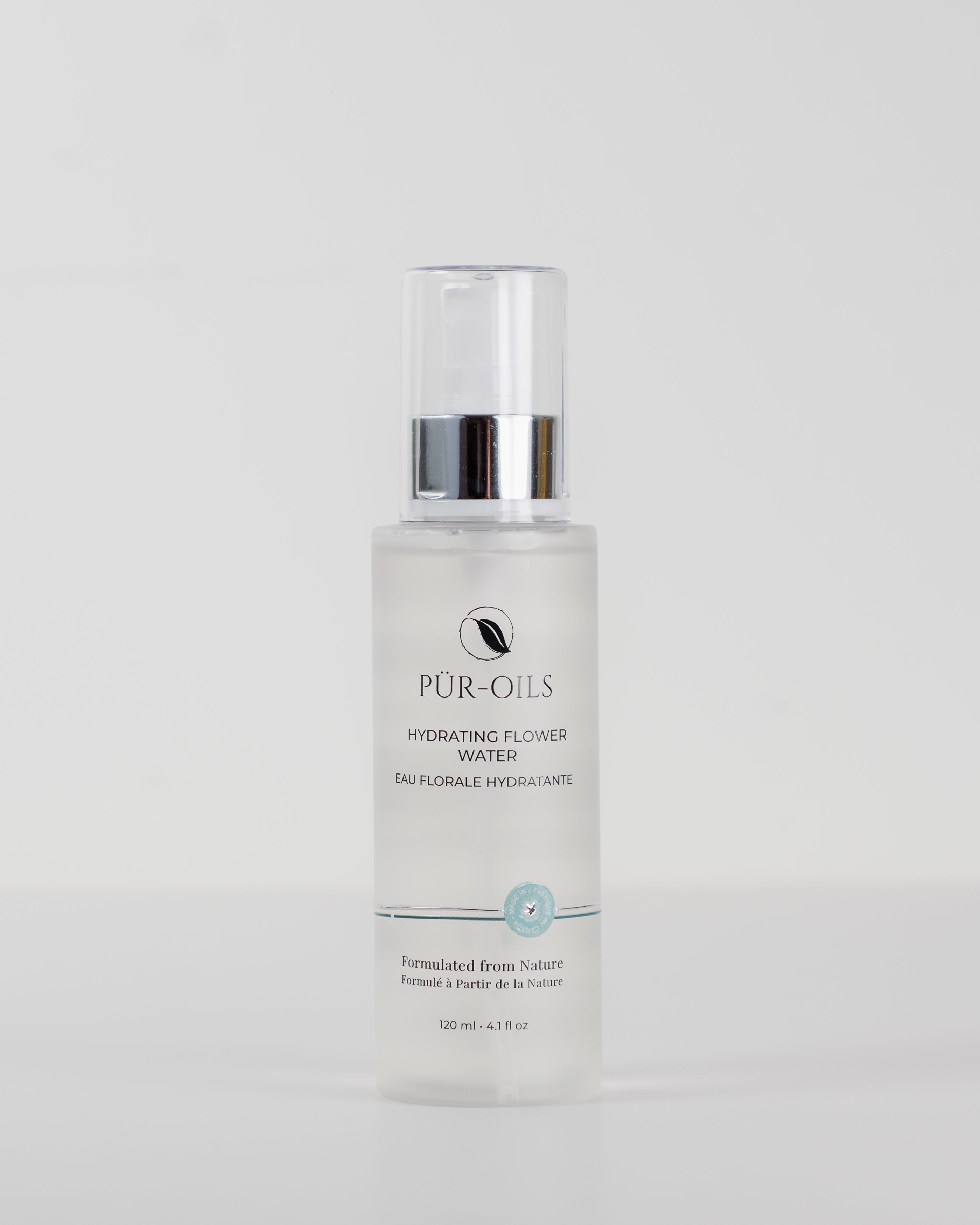
The damp-skin step is the one people skip. Humectants need water to pull from, and applying a serum to dry skin can leave it feeling tight rather than comfortable. Our hydrating flower water is designed to be applied after cleansing and helps facilitate absorption of the products that follow.

How Often, and When to Pull Back
Twice daily is the standard for a hydrating serum, morning and night, and consistency matters more than volume. One pump covers the face and neck. If skin stings on application, cut to once a day for a week before resuming. During a flare, drop back to cleanser, serum, and a plain moisturizer and let the actives wait.
Layering Around Actives and Treatments
If you use a retinoid, an AHA, or a BHA, the hydrating serum belongs underneath, on damp skin, with a short pause before the active goes on. On exfoliation nights, many people find it easier to skip the acid entirely and let the serum and moisturizer do the work. After a professional treatment, follow the aftercare your practitioner gives you.
The Environmental Load Nobody Mentions
Indoor heating, cold wind, hard water, and low humidity pull water from skin all day, and that load is cumulative. A humidifier in the room where you sleep, a mid-day mist, and a slightly richer occlusive in winter do real work that no single serum can do alone.
Watch out: adding three new products in the same week makes it impossible to know which one caused a reaction. Introduce one at a time and give it a week before the next.
Here is the order to follow, from first step to last.
| Step | What to do |
|---|---|
| 1 | Cleanse with lukewarm water and a gentle cleanser |
| 2 | Mist a hydrating toner while skin is still damp |
| 3 | Press in your serum, one pump, over damp skin |
| 4 | Follow with a facial oil or moisturizer to seal it |
| 5 | Finish with SPF in the morning |
Patch Testing and Barrier Repair: The Steps Most People Skip
Patch testing is a sensible step for reactive skin. Apply a small amount to a discreet area before using a new product on your face.
Where Pür-Oils Hydrating Serum Fits in a Sensitive Skin Routine
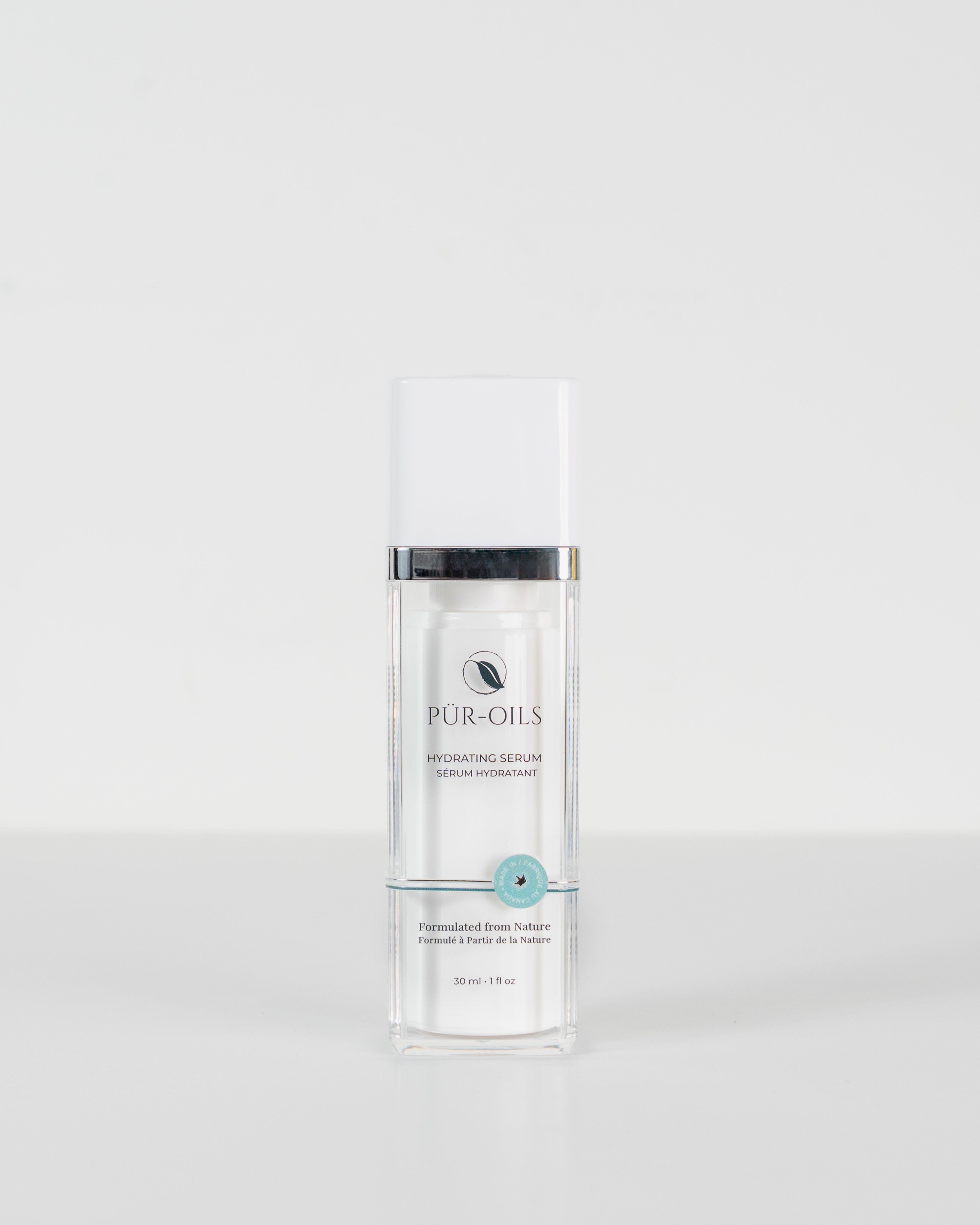
The Hydrating Serum is designed to provide hydration for dry and dehydrated skin concerns. It contains two weights of hyaluronic acid, Licorice Root Extract, Kakadu Plum Extract, and Tripeptide-5. It is suitable for all skin types, including sensitive skin.
Apply one pump morning and night onto clean, damp skin, after flower water and before your oil. You can see the full hydrating serum with hyaluronic acid and read the complete ingredient list before you decide.
Build Your Sensitive Skin Routine With the Essentials Trio
A routine you understand is a routine you keep, and consistency does more for reactive skin than any single product. The Essentials Trio bundles our Hydrating Flower Water, the Hydrating Serum, and your choice of Luxury Oil, including the Delicate version formulated for sensitive skin. You can shop the Essentials Trio and start with three steps instead of ten.
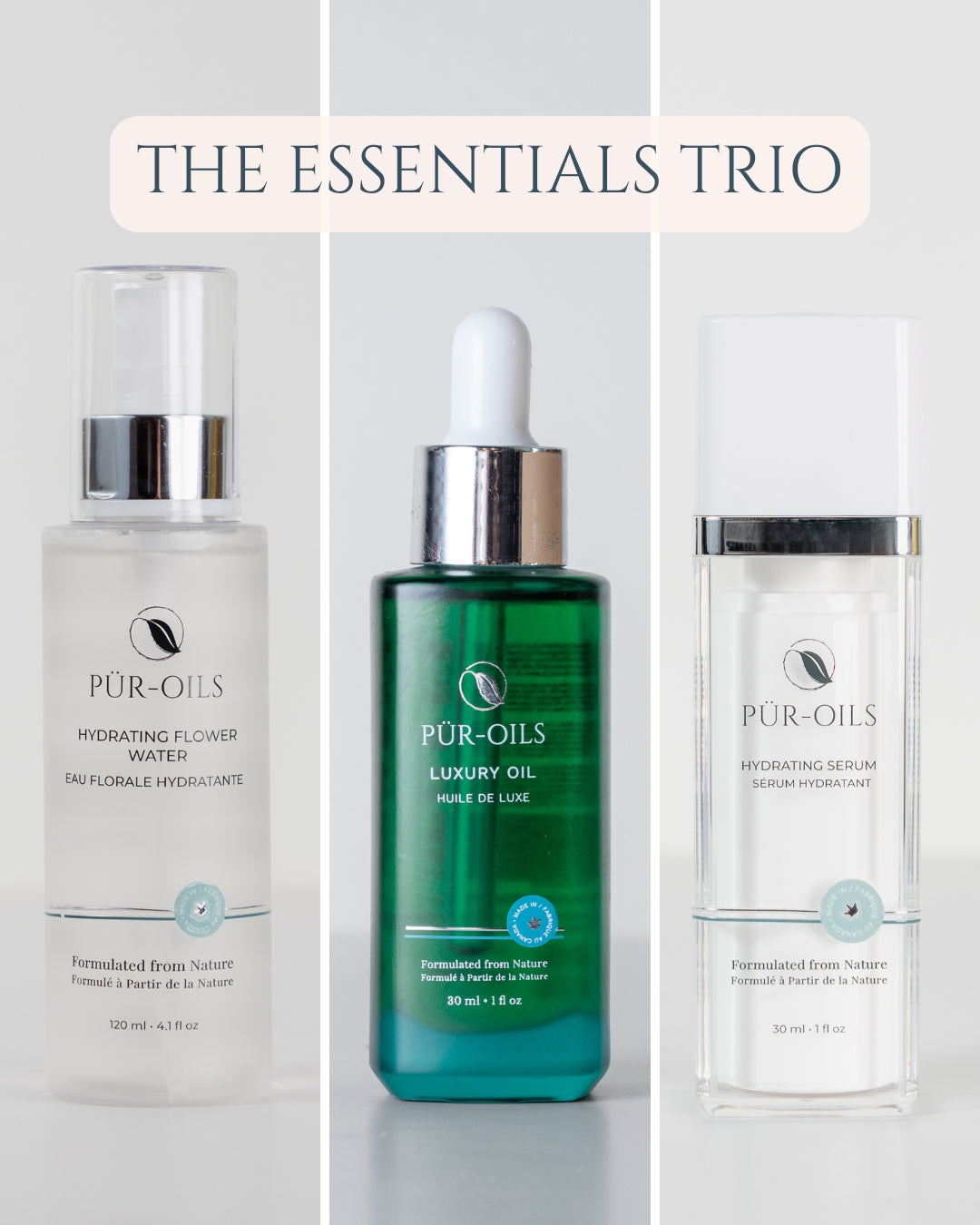
Reactive skin rarely needs more products. It needs the right three, applied in the right order, long enough to see a difference. Pur-oils formulates small-batch, USDA organic skincare, free of sulfates, parabens, and synthetic fragrances, and designed to work together. Start with the Essentials Trio, choose the Delicate oil for sensitive skin, and give your barrier a few quiet weeks.
Frequently Asked Questions
What is the difference between dry and dehydrated skin?
Dry skin lacks oil, while dehydrated skin lacks water. Dry skin often feels rough, tight or flaky and may look dull, because the skin's lipid barrier is not holding moisture in. Dehydrated skin can affect any skin type, including oily skin, and shows up as tightness, dullness and fine lines that look worse than they are. A hydrating serum addresses the water side of the equation, while a facial oil or cream supports the oil side. Knowing which one you have stops you from buying products that do not match your skin's actual need.
Can sensitive skin types use a hydrating serum with hyaluronic acid daily?
Many sensitive skin types can use a hydrating serum daily, morning and night, once they have patch tested it and confirmed no reaction. Hyaluronic acid is a humectant, meaning it attracts and holds water, and it is generally well tolerated. The bigger risk for reactive skin usually comes from added fragrance, essential oils in high concentrations or layering several active treatments at once. Start with one application a day for the first week, watch for redness or stinging, then increase to twice daily if your skin stays calm.
How should I layer a hydrating serum in my skincare routine?
Apply your hydrating serum to clean, slightly damp skin, then follow with a facial oil or moisturizer to seal the water in. At Pür-Oils, the Hydrating Flower Water goes on first after cleansing, then one pump of Hydrating Serum morning and night, then four to six drops of Luxury Oil blended into the palms and massaged in. The general rule for layering skincare serums is thinnest to thickest: water-based formulas first, oils and creams last. Applying a humectant serum to dry skin without anything on top can leave skin feeling tighter, not softer.
Why do different molecular weights of hyaluronic acid matter?
Hyaluronic acid comes in different molecular sizes, and formulators combine weights because each behaves differently on skin. Larger molecules sit closer to the surface and support short-term hydration and plumping, while smaller ones are used to reach further into the upper layers. The point of a two-weight formula is a more complete hydration effect rather than one flat layer of moisture. Pür-Oils Hydrating Serum uses two weights of hyaluronic acid alongside peptides, and the practical difference you notice is how quickly skin stops feeling tight after cleansing.
